

New Delhi, November 10, 2025 — A Blast That Shook the Heart of India
A high-intensity explosion near Delhi’s historic Red Fort on Sunday evening has left the nation in shock. The blast, which occurred around 7 p.m. on November 10, 2025, killed at least eight people and injured nearly 20 others, according to official reports.
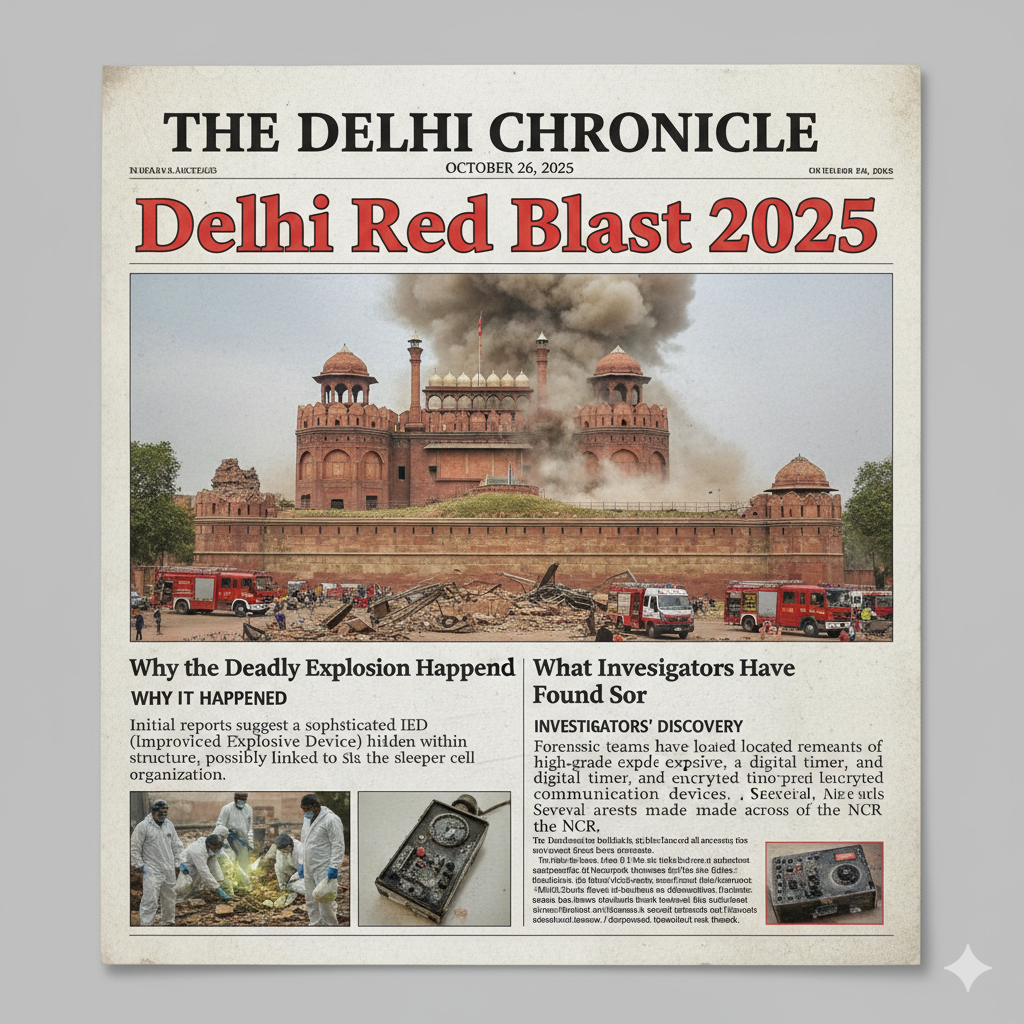

The incident took place near the Red Fort Metro Station on Subhash Marg — one of the busiest areas in Old Delhi — when a Hyundai i20 car suddenly exploded at a traffic signal. The explosion was so powerful that it ignited nearby vehicles and shattered windows of surrounding buildings.
Investigators from the National Investigation Agency (NIA), Delhi Police Special Cell, and National Security Guard (NSG) have confirmed that the blast was not an accident, but a planned act using high-grade explosives.
Why the Delhi Blast Happened: Possible Motives and Early Findings
Officials are yet to release a final conclusion, but multiple lines of investigation are pointing toward terror-related motives. Sources within the Delhi Police suggest that the timing, location, and scale of the explosion indicate a strategic attack rather than a spontaneous event.
1. Targeting a Symbol of National Pride
The Red Fort is one of India’s most significant national symbols — the Prime Minister hoists the national flag here every Independence Day. Attacking such a landmark is often seen as a symbolic challenge to India’s sovereignty.
Experts say that terror groups often target sites that hold historic and emotional importance to create panic, attract global attention, and question the state’s ability to maintain security in its capital.
2. Possible Retaliation by Extremist Networks
Early intelligence reports suggest that the explosion could be linked to Pakistan-based terrorist outfits like Lashkar-e-Taiba or Jaish-e-Mohammed, which have previously conducted similar attacks in India.
According to sources, Indian intelligence agencies had intercepted communications hinting at possible retaliation following the government’s recent counter-terror operations in Jammu & Kashmir. The Delhi blast may have been executed to avenge those losses and reassert presence.
3. Attempt to Disrupt Peace Ahead of Key Events
With the winter session of Parliament set to begin soon and several major national events scheduled in Delhi, investigators believe the attack was timed to create instability and fear in the capital.
By striking near a tourist hotspot and heritage monument, the attackers sought to undermine public confidence and disrupt the city’s normalcy ahead of high-profile gatherings.
4. Testing India’s Urban Security Network
Security analysts also point to the possibility that the perpetrators wanted to test India’s urban response mechanisms. Delhi has some of the highest security surveillance in the country, and an attack in such a heavily monitored zone could have been meant to expose vulnerabilities in intelligence or policing systems.
What the Investigation Has Revealed So Far
Preliminary forensic analysis indicates that the explosives used were military-grade, possibly RDX or PETN, packed inside the car. Investigators are tracing the vehicle ownership trail, studying CCTV footage, and examining mobile tower data to identify suspects.
The driver of the car is yet to be identified. Authorities suspect the vehicle may have been stolen or registered under a fake identity. Teams from the NIA and NSG have also collected residue samples for chemical testing.
Union Home Minister Amit Shah has directed security agencies to “leave no stone unturned” in finding the culprits. He assured that strictest action will be taken once the masterminds are identified.
Nation on High Alert
Following the Delhi Red Fort blast, security has been heightened across major cities including Mumbai, Hyderabad, and Bengaluru. Airports, metro stations, and public gatherings are under intensified surveillance.
The Ministry of Home Affairs has instructed all states to review their local intelligence inputs and ensure readiness against any potential follow-up attacks.