

Bharat Bandh on 12th February: Key Reasons, Demands, and Nationwide Impact
On 12th February, several trade unions, farmer groups, and social organizations have called for a nationwide Bharat Bandh to raise their voices against various economic and social issues. Bharat Bandh, which literally means “shutdown of India,” is a form of protest where organizations request citizens to close businesses, stop transport, and participate in demonstrations to highlight their demands.
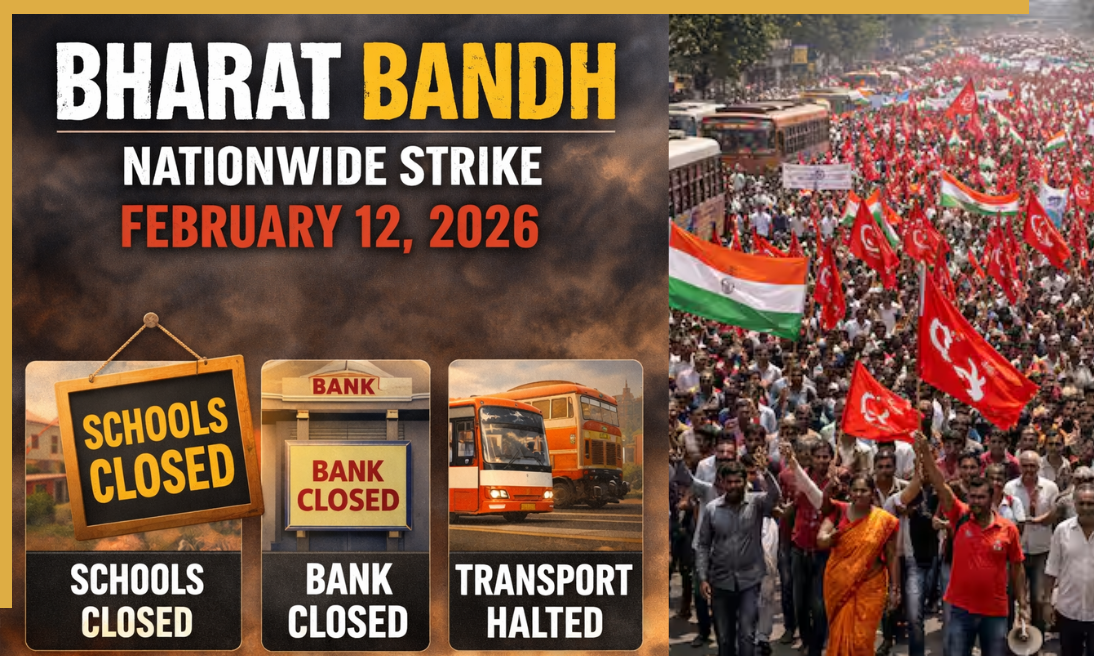

Why is Bharat Bandh called?
The main purpose of the 12th February Bharat Bandh is to draw the government’s attention to a number of pressing concerns affecting workers, farmers, and common citizens. The major reasons behind the bandh include
1. Rising Inflation and Cost of Living
One of the key issues is the continuous rise in prices of essential commodities such as food, fuel, and daily-use items. Trade unions and public groups argue that inflation is putting heavy pressure on middle-class and poor families, making it difficult to manage household expenses.
2. Unemployment Concerns
Another major demand is related to job creation. Protesters claim that unemployment levels, especially among youth, remain a serious concern. They are urging authorities to introduce stronger employment policies and create more opportunities in both government and private sectors.
3. Labour Law and Wage Issues
Several labour organizations are opposing recent labour reforms and demanding better job security, fair wages, and improved working conditions. They are also asking for minimum wage revisions and social security benefits for contract and unorganized workers.
4. Farmers’ Demands
Farmer unions supporting the bandh are expected to raise issues such as Minimum Support Price (MSP) guarantees, rising input costs, loan burdens, and crop price stability. They want long-term solutions to ensure financial security for farmers across the country.
5. Privatization and Public Sector Concerns
Some unions are protesting against privatization of public sector units, claiming it may affect job stability and reduce government control over essential services.
Expected Impact of the Bandh
A Bharat Bandh usually affects normal life in many parts of the country, though the level of impact varies by region.
- Transport Services: Road transport, buses, and taxi services may face disruptions in some cities.
- Shops and Markets: Many local markets and small businesses may remain closed depending on participation.
- Banking and Offices: Banking and government services may be partially affected if unions participate.
- Schools and Colleges: Educational institutions generally remain open, but attendance may be lower in affected areas.
- Emergency Services: Hospitals, ambulances, and essential services usually continue to operate.
Authorities typically deploy security forces and issue advisories to maintain peace and prevent any untoward incidents.
Public Response and Government Stand
While some groups strongly support the bandh, others believe such shutdowns disrupt daily life and economic activity. The government often appeals for calm and encourages dialogue instead of protests. In many cases, discussions between union leaders and officials continue even after the bandh.