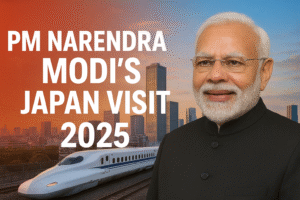
PM Narendra Modi’s Japan Visit 2025: Key Highlights, Purpose, Investment Deals and Strategic Ties
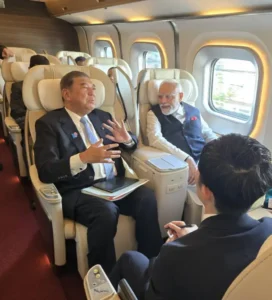
Tokyo, August 29–30, 2025: Indian Prime Minister Narendra Modi embarked on his eighth visit to Japan as Prime Minister, underscoring the growing depths of the India–Japan Special Strategic and Global Partnership. This two-day trip—culminating in the 15th India–Japan Annual Summit with Japanese Prime Minister Shigeru Ishiba—focused on enhancing economic, technological, and security ties amid shifting geopolitical currents.
Investment and Economic Security: A Major Boost for “Make in India”
Japan is set to elevate its investment pledge to 10 trillion yen (approximately $68 billion) over the next decade—a dramatic rise from prior commitments.This investment surge reinforces Prime Minister Modi’s flagship initiative “Make in India, Make for the World,” which he promoted at the India-Japan Economic Forum in Tokyo by portraying India as a global hub of manufacturing and innovation.
A standout ambition emerging from these talks is the potential 500,000-person exchange program between India and Japan over five years, including 50,000 skilled workers—a move that responds to Japan’s labour shortage and leverages India’s youthful workforce.
Tech, Chips, and Critical Minerals: Securing Tomorrow
Modi’s visit spotlighted collaboration in cutting-edge sectors. Strategic pacts are underway to secure cooperation in semiconductors, artificial intelligence (AI), and critical minerals, reflecting shared concerns over supply-chain resilience and regional competition.At the same time, discussions touched upon economic security, aimed at sheltering both economies from global turbulence.
Strategic Security: Quad, Defence & Indo-Pacific Stability
Amid rising U.S. tariffs and a volatile global trade environment, the India–Japan strategic partnership has taken on renewed urgency. Both leaders reaffirmed commitment to a free, open, rules-based Indo-Pacific, deepening defence collaboration in AI, space, high-speed rail, and cybersecurity.The summit also underlined the importance of the Quad alliance (US, Japan, India, Australia) to regional stability, with shared concerns about rising tensions in East and South China Seas and challenges posed by terrorism.
Space, Digital Innovation & People-to-People Ties
A landmark in space cooperation featured the signing of an ISRO–JAXA arrangement for the Chandrayaan-5 lunar mission, marking a significant milestone in joint space exploration.In addition, a “Digital Partnership 2.0” agreement was inked to boost collaboration in digital public infrastructure, AI, the Internet of Things (IoT), and semiconductor R&D.
These technological and scientific commitments were accompanied by a broader bilateral vision: a 10-year strategic plan covering economic collaboration, ecological sustainability, health, mobility, and cultural exchange. Humanitarian cooperation was also strengthened through a joint crediting mechanism for decarbonisation, support for wastewater management, environmental conservation, and exchange programmes across cultural and diplomatic circles.
Cultural Bridges & Warm Welcome
Modi’s arrival was greeted with fervent warmth by the Indian diaspora, whose cultural performances deeply moved the Prime Minister. A Japanese spectator, struck by the exuberant welcome, exclaimed, “The best day has arrived for me.”
In a symbolic gesture of cultural connection, Modi received a Daruma doll—a traditional talisman—from the Shorinzan Daruma-ji Temple’s chief priest. This gift, rooted in the legacy of Bodhidharma—an Indian monk who influenced Japanese Buddhist traditions—highlighted historical and cultural ties. Tokyo’s iconic Skytree was also illuminated in Indian tricolour, underscoring the visit’s significance.
What’s Next: From Japan to China and Beyond
Following the conclusion of the Japan visit, Prime Minister Modi will travel to Tianjin, China, to attend the Shanghai Cooperation Organisation (SCO) Heads of State Council meeting (August 31–September 1), where he is scheduled to meet Xi Jinping and Vladimir Putin.
About the Author